Manaslu Circuit Trek for 14 Days

Tour Info

trip code

EN-024

Starting Point/ End Point

Kathmandu

Accommodations

Lodge/ Tea House

Max Altitude

5106m (Larkya La Pass)

Duration

12 days

country

Nepal

Trip grade

Easy

Activities

Trekking

Best Season

February, March, April, May, June, September, October, November and December

Overview

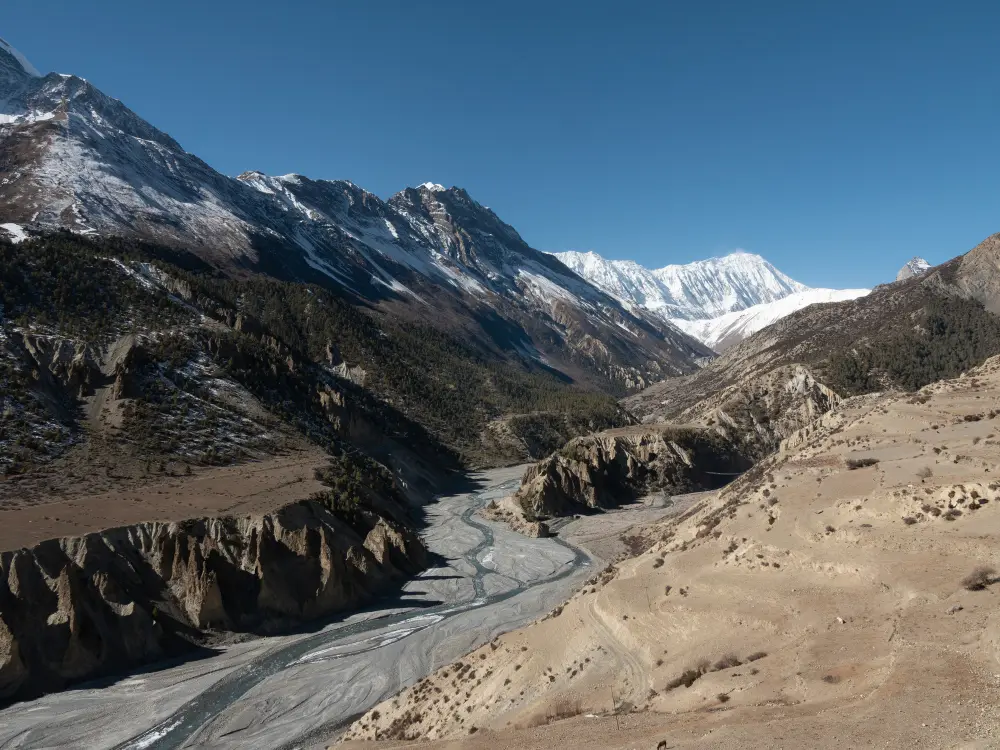
The Manaslu Circuit Trek is one of Nepal’s most famous trekking routes in the Gorkha District. This trek takes you around the majestic Manaslu, the eighth-highest mountain in the world. It offers a chance to see the natural beauty of the Himalayas and experience local culture. The trek shows local life, traditions, hospitality, different landscapes, from green forests to high mountain passes. You pass through villages like Dharapani, Bihi, Namrung, and Lho, known for apple farming. Key viewpoints include Lho (3,180 m), Syala (3,500 m), Samagaun (3,520 m), Manaslu Base Camp (4,800 m), and Larkya La Pass (5,160 m). From Syala valley, you can see Manaslu, Himalchuli, Ngadi Chuli, Ganesh Himal, and Annapurna II.

Details about Manaslu Circuit Trek

You should visit the Manaslu Circuit to experience a unique mix of culture, nature, and Himalayan life. This region has been home to local communities for generations, and you can see their traditional houses, mani walls, and Buddhist monasteries as you travel. People here still practice old ways of life, including farming, yak herding, and apple cultivation, which show how they live sustainably in the mountains. Visiting Manaslu gives you a chance to see daily routines, local festivals, and customs up close, offering a real insight into Himalayan culture.

The natural beauty of Manaslu is another reason to come. The area is full of wildlife, including Himalayan birds and red pandas, and forests of rhododendron and other native plants. The combination of wildlife, plants, and cultural sights makes it an enriching experience for anyone who enjoys learning about nature and human life together.

Manaslu Circuit is different from other busier trekking routes. The villages feel genuine, and the mountains remain largely untouched. You can enjoy clear views of high peaks, watch the local life up close, and feel connected to the Himalayan environment. Visiting here gives a mix of culture, nature, and adventure that is hard to find anywhere else in Nepal.

Highlights

  • You get clear views of Mt. Manaslu (8,163m) and other peaks like Himalchuli, Shringi Himal, Ngadi Chuli, and Ganesh Himal.

  • The main challenge of the trek is crossing the Larke Pass (5,160m), the highest point of the route.

  • Explore Gurung and Tibetan-style villages such as Jagat, Deng, Namrung, Lho, and Samagaun.

  • Optional hike to the Manaslu Base Camp viewpoint from Samagaun.

  • Stay in simple teahouses, where the environment is quiet and basic.

  • The route follows the Budhi Gandaki River, with several suspension bridges along the way.

  • Chance to see yaks, blue sheep, and different birds in the higher altitudes.

Itinerary

Day 01: Arrival in Kathmandu

You arrive in Kathmandu, the capital city of Nepal, and be welcomed by our representative at the airport. After the check-in process at your hotel, you can take some rest after a long flight or wander around the lively streets of Kathmandu, exploring places like Thamel, Durbar Marg, and Ason Bazaar. In the evening, enjoy a warm dinner and prepare for the trek starting the next day.

  • Max Elevation: 1,400 meters (Kathmandu)
  • Travel Distance: 6 to 8 kilometers
  • Travel Hours: 20 to 30 minutes
  • Accommodation: 3 star standard Hotel
  • Meal: Dinner

Day 02: Guided Full Day Tour

After breakfast at the hotel, your sightseeing tour starts around 8 AM. You can have a private vehicle for the whole day, making the trip comfortable and easy. A professional tour guide shall also be with you to explain the places you visit. The tour follows a simple schedule because it gives you enough time to explore each site without rushing, so you can move at a relaxed pace. You stop at several important heritage sites around the Kathmandu Valley. Each place has its own history and cultural value, which your guide helps you understand.

A. Pashupatinath (World Heritage Site):

Pashupatinath Temple is one of the most important Hindu temples dedicated to Lord Shiva. It stands on the banks of the Bagmati River. Non-Hindus cannot enter the main temple, but you can still see the temple complex and daily rituals clearly from the eastern side of the river. The temple has a two-tiered pagoda design and is well-known worldwide.

B. Boudhanath (World Heritage Site):

Boudhanath is one of the most sacred Buddhist sites in Kathmandu. Built in the 5th century, the large stupa has four pairs of Buddha’s eyes facing all directions, symbolizing awareness. You can see many Buddhist devotees walking around the stupa while rotating prayer wheels.

C. Patan Durbar Square (World Heritage Site):

Located in central Lalitpur, Patan Durbar Square showcases traditional Newari architecture at its finest. Many of its buildings were created during the Malla period, known for rich craftsmanship and art.

D. Swayambhu Stupa / Monkey Temple:

Located on a small hill, Swayambhu offers a wide view of the Kathmandu Valley. It is also called the Monkey Temple because many monkeys live around the stupa. This site is very important to both Buddhists and Hindus.

  • Max Elevation: 1,450 meters (Swayambhu Stupa, highest point in the Kathmandu sightseeing tour)
  • Travel Distance: 25 to 30 kilometers (total driving between sites)
  • Travel Hours: 6 to 7 hours
  • Accommodation: 3 Star Standard Hotel
  • Meal: Breakfast

Day 03: Drive from Kathmandu to Machha Khola(900m/2953 fts/155km)

You begin the journey with a full-day drive covering about 155 km in roughly 7 to 8 hours from Kathmandu toward Machha Khola.  Machha Khola is a small riverside village with basic lodges and shops, located in the Budhi Gandaki region. The road is mostly paved until Arughat and becomes rougher afterward. Along the way, you pass small towns, hillside settlements, and bridges.This is the last stop for the day before trekking starts tomorrow. You can rest, check your gear, and prepare for the first day of trekking.

  • Max Elevation: 900 meters (Machha Khola, the highest point between Kathmandu and Machha Khola)
  • Travel Distance: 155 kilometers
  • Travel Hours: 7 to 8 hours
  • Accommodation: Tea house/Lodge
  • Meals: Breakfast, Lunch and Dinner

Day 04: Trek from Machha khola to Jagat(1410m/4626ft)

Trek starts from Machha Khola towards Jagat along the Budhi Gandaki River. Jagat is a village with simple lodges and shops, and the walk covers around 20 km, usually taking 7 to 8 hours, as the trail rises slowly with small climbs. You pass Khorlabesi, Tatopani, and Dobhan. It is also the entry point for the Manaslu Conservation Area. You register at the check post before continuing higher. The village provides basic facilities and is the first overnight stop on the trek.

  • Max Elevation: 1,410 meters (Jagat, the highest point between Machha Khola and Jagat)
  • Travel Distance: 20 kilometers
  • Travel Hours: 7 to 8 hours
  • Accommodation: Tea house/Lodge
  • Meals: Breakfast,Lunch and Dinner

Day 05: Trek from Jagat to Deng (1804m/5919ft)

From Jagat, the trail rises gently to Deng, you pass small settlements and open areas. Deng is a quiet village with tea houses and lodges. The distance is about 20 km, and it takes you around 7 to 8 hours to reach Deng. It is surrounded by trees and houses. Deng stops you to help to adjust in the altitude before going higher.

  • Max Elevation: 1,804 meters (Deng, the highest point between Jagat and Deng)
  • Travel Distance: 20 kilometers
  • Travel Hours: 7 to 8 hours
  • Accommodation: Tea house/Lodge
  • Meals: Breakfast,Lunch and Dinner

Day 06: Trek from Deng to Namrung(2630m/8629ft)

The trail continues upward toward Namrung from Deng; you pass small houses and fields along the path. Walk from Deng to Namrung covers about 19.4 km, taking 7 to 8 hours to reach, and it is a larger village with more houses and shops. Peaks such as Manaslu and other surrounding mountains become more visible from this point. The path gradually ascends, allowing you to adjust to the higher altitude. This day combines walking with observing local culture and nearby mountains while moving steadily to the next village.

  • Max Elevation:  2,630 meters (Namrung, the highest point between Deng and Namrung)
  • Travel Distance:  19.4 kilometers
  • Travel Hours: 7 to 8 hours
  • Accommodation: Tea house/Lodge
  • Meals: Breakfast,Lunch and Dinner

Day 07: Trek from Namrung to Lho Village (3180/10433fts/10.5km/6.5mile)

Leaving Namrung, the path rises toward Lho Village, you trek through Chumling and the lower parts of Lho while climbing slowly. Lho is a small village with flat areas suitable for resting, and you have to cover around 8.1 km in about 4 to 5 hours to reach there. Trees become fewer, and open areas with grass and rocks appear. Peaks such as Manaslu can be seen clearly from Namrung. The trail helps trekkers prepare for the higher sections ahead. You notice changes in land and local life while walking continuously. This part introduces the higher altitude environment and local village culture.

  • Max Elevation: 3,180 meters (Lho Village, the highest point between Namrung and Lho)
  • Travel Distance: 10.5 kilometers
  • Travel Hours: 4 to 5 hours
  • Accommodation: Tea house/Lodge
  • Meals: Breakfast,Lunch and Dinner

Day 08: Trek from Lho village to Samagaon (3530m/11582 fts/8.1km/5 mile)

The trail takes you from Lho Village to Samagaon with a gentle climb, open fields and yak grazing areas. It takes you around 8.1 km in about 4 to 5 hours to reach Samagaon from Lho village. Samagaon is larger and closer to high-altitude areas, and from there surrounding mountains, including Manaslu and Ngadi Chuli, are visible. By now trees are mostly gone, the land is rocky, and the path is clear and steady, allowing observation of the mountains and local villages. As the altitude rises, you need to walk slowly and carefully.

  • Max Elevation: 3,530 meters (Samagaon, the highest point between Lho Village and Samagaon)
  • Travel Distance: 8.1 kilometers
  • Travel Hours: 4 to 5 hours
  • Accommodation: Tea house/Lodge
  • Meals: Breakfast,Lunch and Dinner

Day 09: Acclimatization day and detour to Manaslu base camp(4800m/15749ft)

The activity done on this day is a short trek from Samagaon to Manaslu Base Camp, reaching up to 4800m, which usually takes 6 to 7 hours for the round trip.  Manaslu base camp is surrounded by high peaks like Manaslu and Himalchuli, and the path rises gradually through rocks and glacial areas. This detour allows you to adjust to higher altitude while observing glaciers and snow fields. Returning to Samagaon, you get a clear view of nearby mountains, and trekking slowly helps you in acclimatization. You can trek slowly to adjust to the air and observe the high mountains and local paths.

  • Max Elevation: 4,800 meters (Manaslu Base Camp, the highest point between Samagaon and Manaslu Base Camp)
  • Travel Distance: 14 kilometers (round trip)
  • Travel Hours: 6 to 7 hours
  • Accommodation: Tea house/Lodge
  • Meals: Breakfast,Lunch and Dinner

Day 10: Trek from Samagaon to Samdo (3860m/12665fts/8.1km/5.03mile)

From Samagaon, the trail goes upward toward Samdo covering around 8.1 km in and around 3 to 4 hours. Samdo is a small village before the high pass, and peaks like Manaslu, Manaslu South, and Naike can be seen clearly. You pass small fields and a few houses, and the trees are almost gone. The path is rocky and rises slowly, preparing you for the Larkya La pass. You need to walk slowly to allow your body to adjust to thinner air. The day offers views of high-altitude landscapes, distant mountains, and local culture along the trail.

  • Max Elevation: 3,860 meters (Samdo, the highest point between Samagaon and Samdo)
  • Travel Distance: 8.1 kilometers
  • Travel Hours: 3 to 4 hours
  • Accommodation: Tea house/Lodge
  • Meals: Breakfast,Lunch and Dinner

Day 11: Trek from Samdo to Dharamshala(4460m/14633fts/6.6km/4.10mile)

The route ascends from Samdo to Dharamshala, which takes you around 4 to 5 hours to cover 6.6 km. Dharamshala is a resting point before the Larkya La pass, and vegetation is very limited here. You get a chance to see peaks including Manaslu, Ngadi Chuli, and Himalchuli. The climb is gradual but noticeable at this high altitude. Walking slowly helps you to adjust to the air, as this section prepares you for the pass ahead and provides clear views of surrounding high mountains and open slopes.

  • Max Elevation: 4,460 meters (Dharamshala, the highest point between Samdo and Dharamshala)
  • Travel Distance: 6.6 kilometers
  • Travel Hours: 4 to 5 hours
  • Accommodation: Tea house/Lodge
  • Meals: Breakfast,Lunch and Dinner

Day 12: Trek to Bhimthang via Larkya La pass (5106m/16752fts,24.5km/15.22mile)

Starting early from Dharamshala for Bhimthang via Larkya La Pass, the path ascends to the highest point at Larkya La Pass. You have to trek around 24.5 km, which usually takes you 4 to 5 hours to reach there. The pass reaches 5106 meters and offers views of Manaslu, Himalchuli, and Cheo Himal. After crossing, the trail descends toward Bhimthang. The trek covers rocks, slopes, and some snow. This is the most challenging day because of the high altitude and long distance. Bhimthang provides open areas to rest and observe surrounding peaks.

  • Max Elevation: 5,106 meters (Larkya La Pass, the highest point between Dharamshala and Bhimthang)
  • Travel Distance: 24.5 kilometers
  • Travel Hours: 10 to 11 hours
  • Accommodation: Tea house/Lodge
  • Meals: Breakfast, Lunch and Dinner

Day 13: Trek from Bhimthang to Goa village /Tilche(2300/7546 fts)

The trail descends from Bhimthang toward Goa and Tilche. To reach there you need to trek around 26 km, which takes you 6 to 7 hours. Peaks like Cheo Himal and Naike are visible in the distance during the trek. The path passes through houses, and trees start to appear as altitude decreases. The trek is steady, connecting high pastures with lower villages. You get to observe the mountain landscape while you are returning to lower altitude. Trekking continues at a simple and steady pace along the clear path.

  • Max Elevation: 3,720 meters (Bhimthang, the highest point between Bhimthang and Goa Village/Tilche)
  • Travel Distance: 26 kilometers
  • Travel Hours: 6 to 7 hours
  • Accommodation: Tea house/Lodge
  • Meals: Breakfast,Lunch and Dinner

Day 14: Trek to Dharapani, Drive to Kathmandu and Pokhara

The final day leads from Tilche to Dharapani, and from there you have to drive back to Kathmandu or Pokhara. The drive goes downward through forests and small villages, covering around 215 km and taking 9 to 10 hours to reach. Mountains become smaller as elevation decreases. Dharapani is the junction to main roads connecting to Kathmandu or Pokhara. Trekking continues at a gentle pace through villages and farmland. This completes the Manaslu Circuit Trek. You get to observe the change from high mountains to lower valleys. The path is clear, and the final walk gradually transitions from high-altitude mountain views to green hills and villages below.

  • Max Elevation: 1,860 meters (Dharapani, the highest point between Tilche and Dharapani)
  • Travel Distance: 215 kilometers to Kathmandu and 133 kilometers to Pokhara
  • Travel Hours: 1.5 to 2 hours trekking and 9 to 10 hours drive
  • Accommodation: Tea house/Lodge
  • Meals: Breakfast,Lunch and Dinner

What's included

  • Two nights hotel stay in Kathmandu and one night in Pokhara inclusive of breakfast

  • Any transfer to and from airports, hotels and busparks

  • All the trek meals (breakfast, lunch, and dinner) including tea or coffee

  • Comfortable and family-friendly tea house or lodging accommodation during the trek

  • Local or tourist transportation from Kathmandu

  • Certified English speaking trekking guide

  • Salary, meals, insurance, accommodation and necessary trekking equipment of Guide

  • Extensive first aid kit supplied by the guide

  • All the trekking permits (ACAP and TIMS) and the paperwork

  • Any government tax, local charges, and government service fees

  • The trek concludes in Kathmandu with a farewell dinner

What's excluded

  • Flights within and outside the country

  • Nepal entry visa fees

  • Medical insurance and travel insurance

  • Personal costs like snacks, drinks, laundry, phone calls and hot showers

  • Individual walking equipment and clothing

  • Extra accommodation or meals at Pokhara

  • Emergency expenses such as evacuation by helicopters or medical rescue

  • Sightseeing fees in Kathmandu and Pokhara

  • Additional guide and porter tips

User Review