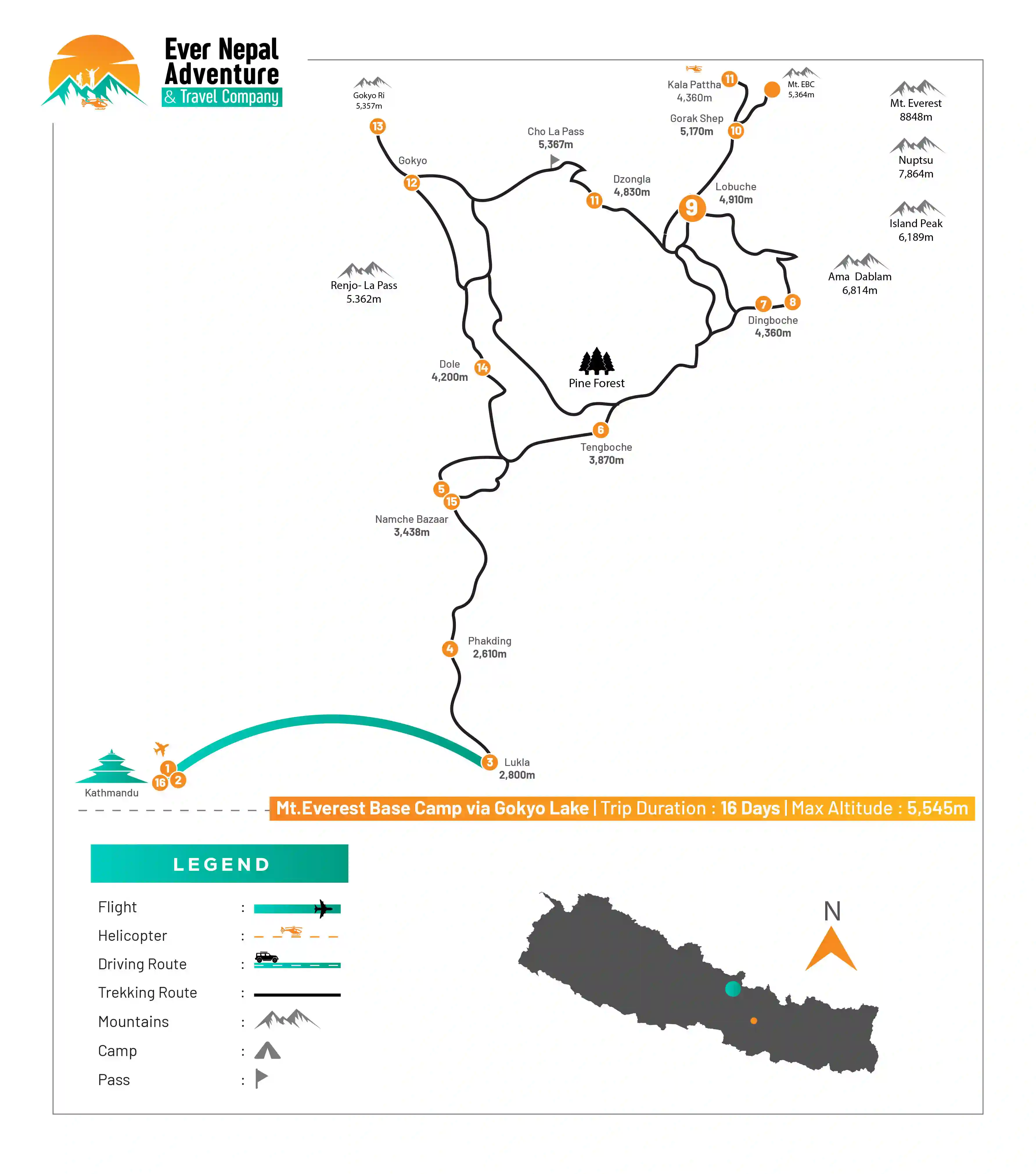
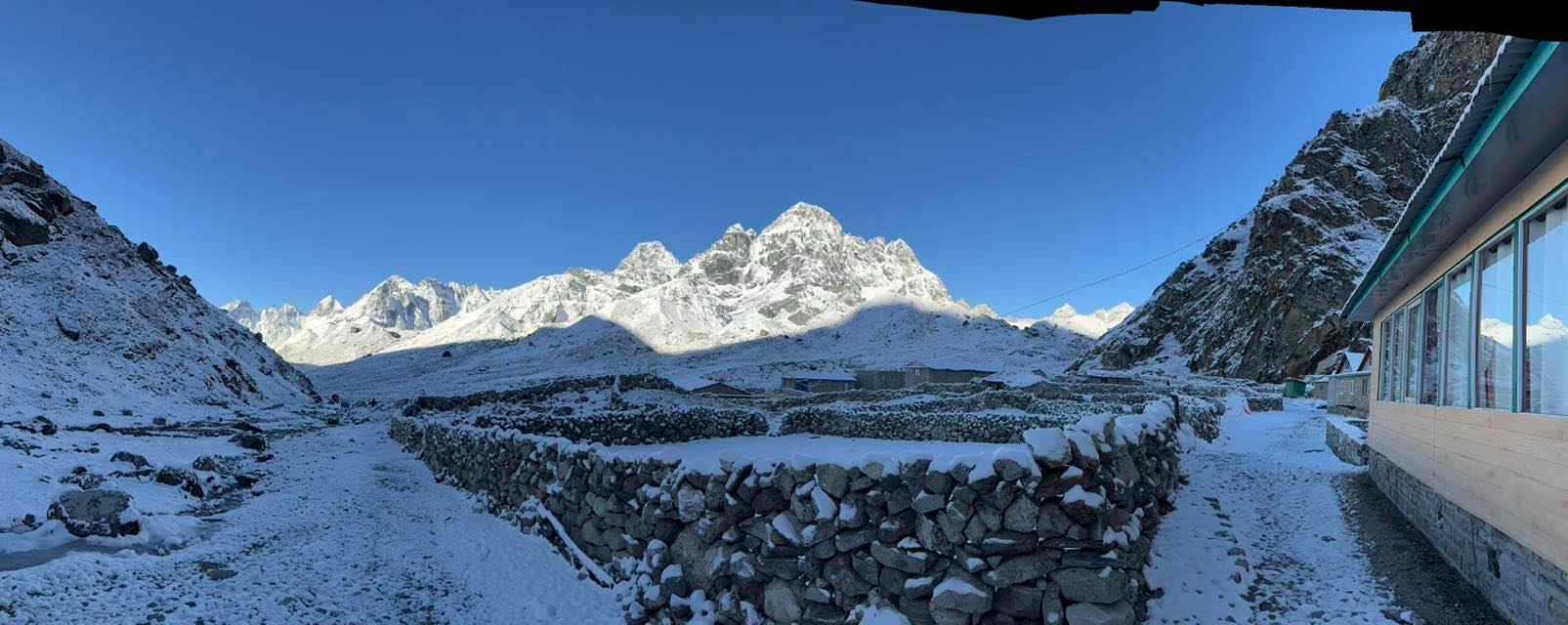


The Everest Base Camp with Gokyo Lake Trek connects two main parts of the Everest region; which are the Gokyo Valley and the Everest Base Camp area near the Khumbu Glacier. These two places are linked by the Cho La Pass, and passes through the lake side to the Everest side in a direct way. As the area is at high altitude, the region is known for views of Everest, Lhotse, Makalu, and Cho Oyu. Both Everest Base Camp and Gokyo Lake lie inside Sagarmatha National Park, so the environment in both places follows the same high-mountain area. Everest Base Camp is located at the bottom of Mount Everest on the Khumbu Glacier. You can see the base of the Mt. Everest itself, the icefall, and nearby peaks like Lhotse, Nuptse, Pumori, and Lingtren. Because the ground is mostly covered with ice, rocks, and glacier surfaces, the whole area feels open and raw, giving it a true high-altitude atmosphere. The landscape slowly changes and leads you to Gokyo Lake towards the western side of the region, a group of calm, clear freshwater lakes resting at high elevation. Among them, the main lake, Gokyo Cho, stands out as one of the highest freshwater lakes in the world, making it a special and well-known point in the area.
Details
Everest Base Camp and Gokyo Lake are two well-known places in the same mountain region, and visiting them gives you a close view of tall mountains, wide glacier fields, and open land that stays cold most of the year. You can see the tall mountains, the wide glacier fields, and the open land that stays cold most of the year. Also, you can visit nearby villages, including Namche, Khumjung, and Gokyo, which follow similar cultural patterns.
Since these villages fall within Sagarmatha National Park, the wildlife is also shared, with animals such as Himalayan tahr, musk deer, and snow pigeons seen in different parts of the region, along with basic plants that grow in the cold. From the nearby hill, you can see several mountains lined together, which helps you understand the layout of the region. If you like observing daily life, you can enjoy watching how people grow small crops, take care of animals, or walk on narrow paths from one village to another.